

Industrial Noise Reduction Starts with Overlooked Processes Like Part Marking
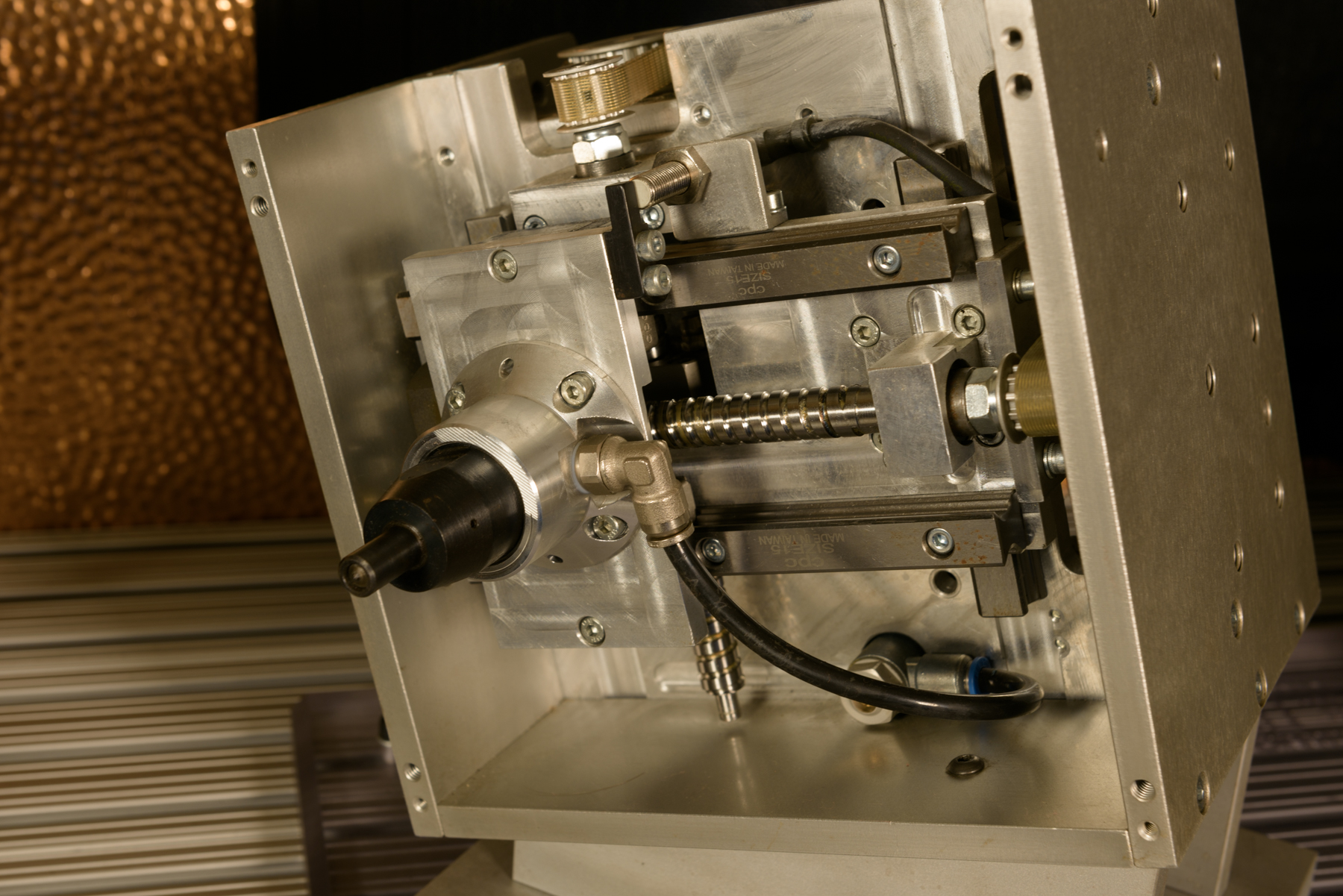
IS60 Underside of Marking Head System
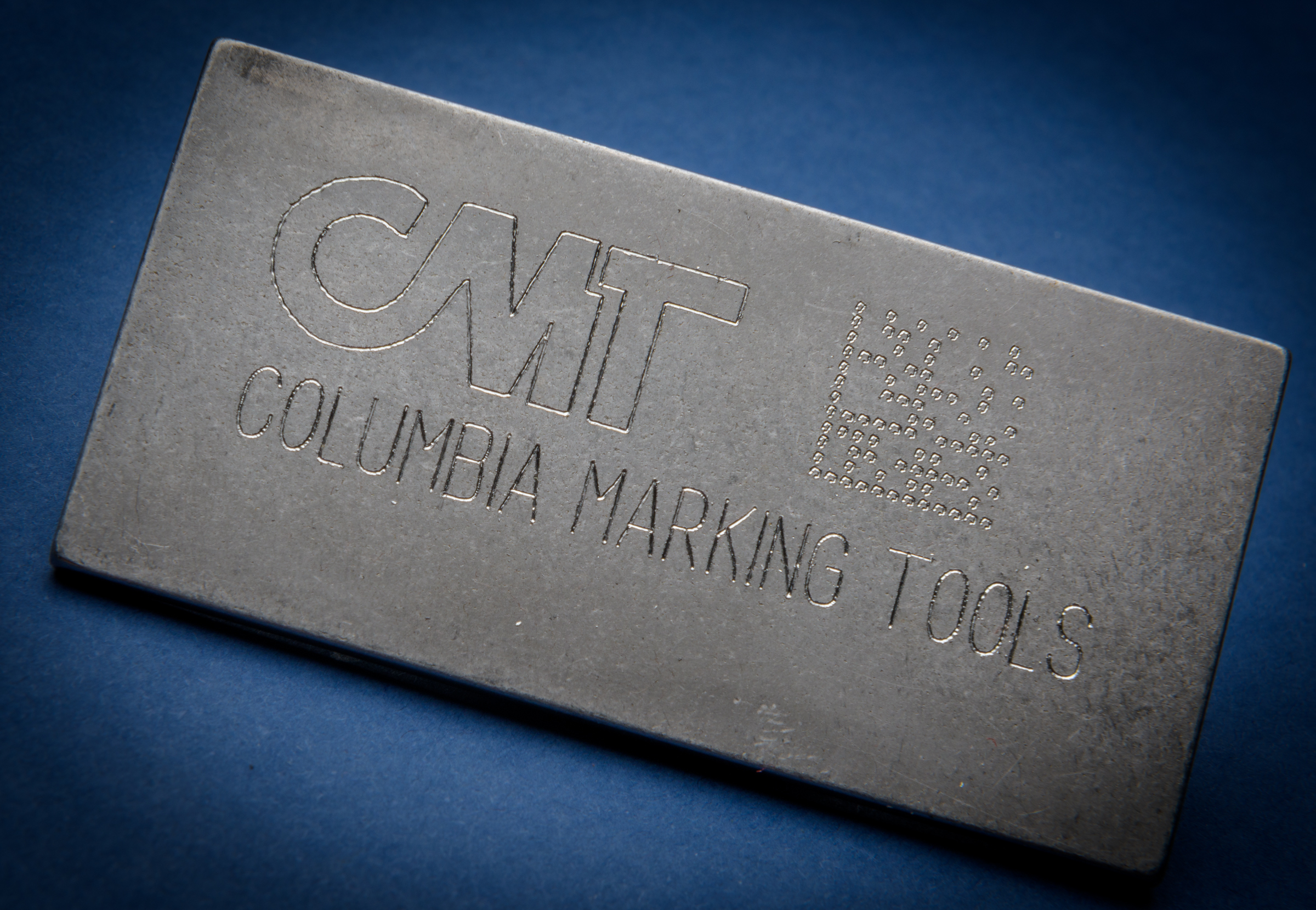
Scribe Mark on Metal
CMT helping you make your mark!
Part marking methods such as dot peen and scribe systems can influence workplace noise levels in manufacturing environments focused on traceability.
Permanent part marking is a requirement across a wide range of industries, supporting traceability, quality control, compliance, and lifecycle tracking. Serial numbers, identification codes, and batch markings are applied to components throughout production, often at high volumes and high cycle rates. While the function is essential, the method used to create these marks can influence the acoustic environment on the shop floor.
Traditional dot peen marking systems are widely used because they can produce durable marks on metals and other industrial materials. The process relies on a rapidly actuated stylus that impacts the surface repeatedly to form characters from a series of dots. While effective for permanent identification, the repeated mechanical striking introduces a consistent high-frequency sound source into production areas. In facilities running continuous marking operations, this sound can contribute to cumulative exposure levels alongside other equipment.
Occupational safety guidance recognizes prolonged exposure to elevated noise as a risk factor for hearing damage, reduced communication clarity, and operator fatigue. In environments where workers depend on audible alarms, verbal instructions, and situational awareness, noise control is increasingly treated as part of overall process design rather than a secondary concern.
Scribe marking provides an alternative approach by replacing repeated impact with continuous contact engraving. Instead of striking the surface, a stylus remains in steady contact while guided along a programmed path, forming characters through a smooth cutting motion. This fundamental difference in marking method reduces the mechanical impact noise associated with dot peen systems.
The IM IS60 Silent Scribe from Columbia Marking Tools applies this principle in industrial marking applications where reduced noise is a priority. By eliminating repetitive striking, the system produces a quieter marking cycle while still generating permanent, readable identification marks suitable for traceability requirements.
Beyond noise reduction, scribe marking produces continuous-line characters rather than dotted formations. This can improve visual readability in inspection environments and reduce variability in mark appearance across production runs. The process is also consistent over long operating cycles, supporting integration into both manual and automated workflows.
"Manufacturers are increasingly paying attention to the smaller contributors to workplace noise," said a production systems engineer familiar with marking technologies. "When you remove repeated impact from processes like marking, you can noticeably reduce the overall sound profile of a line without changing core production output."
Modern scribe systems can be deployed as standalone stations or integrated directly into automated production lines, allowing facilities to adopt quieter marking methods without major process redesign. This flexibility has made engraving-based marking a consideration in environments where noise management is part of broader safety and efficiency planning.
As manufacturers continue to evaluate operational risks and compliance requirements, attention is increasingly shifting toward incremental improvements in everyday processes. Part marking, while often secondary in focus, represents one area where equipment selection can influence both traceability performance and workplace conditions.
Scribe marking technology reflects this shift by addressing a functional requirement—permanent identification—while also reducing a less obvious byproduct of production: accumulated noise exposure.
Michelle Krembel
Columbia Marking Tools
+1 586-634-2920
email us here
Visit us on social media:
LinkedIn
Bluesky
Instagram
Facebook
YouTube
X
Other
Columbia mARKING tOOLS sCRIBE
Legal Disclaimer:
EIN Presswire provides this news content "as is" without warranty of any kind. We do not accept any responsibility or liability for the accuracy, content, images, videos, licenses, completeness, legality, or reliability of the information contained in this article. If you have any complaints or copyright issues related to this article, kindly contact the author above.
